It has been a hard couple of weeks. It’s not going to get any easier, I’m afraid. Not for a while. DIS canceled our study abroad program on March 10th, after the cases of Corona Virus in Denmark tripled over night. Study abroad programs everywhere, excluding Italy, China and South Korea, were all shut down within roughly the same timeline. The US instituted a travel ban that was, unsurprisingly, framed in a way that induced panic amongst US citizens abroad, not realizing that it would be possible for us to return home even under the travel ban. I chose to leave Saturday, a day into the new travel ban, flying out of the U.K., just in case flights out of other places began to be canceled. My last days were incredibly sad, but incredibly fun. I spent time with friends. I got boba in Nørrebro for the last time for a while. I had a hygge night with my host parents before I left, eating pastries and drinking and spending time together. They dropped me off at the airport. I cried a lot (so much so my host sister made fun of me).
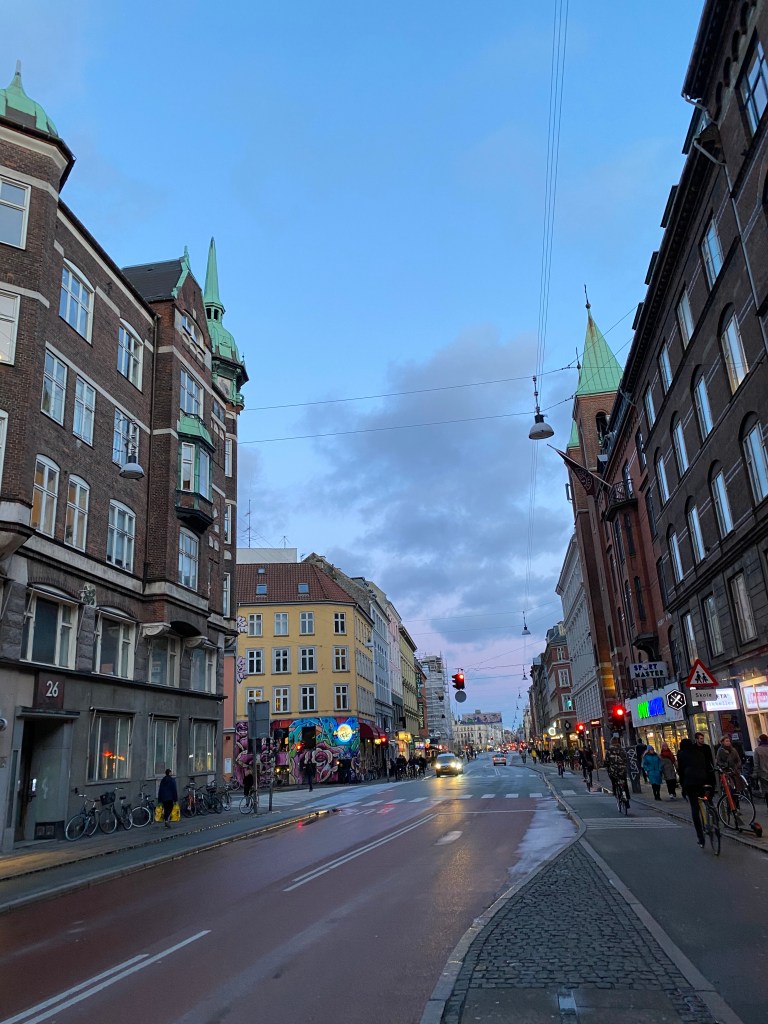
I will have reflections on my time abroad in Denmark to come. I was very shaped and moved by the two months I spent there. And of course I am heartbroken to leave, but right now, I feel like there are other pressing things to reflect upon. I’ll indulge in recalling my time in Denmark more vividly in a later blog post.
It’s been fascinating to study abroad in a time of unprecedented massive border shut downs. In a time where typically I would be experiencing the world open up to me, being a resident of a new country, I have witnessed the world closing itself off, shutting itself down. This is how it has been suggested we contain the virus, and I am in the vein of being overly cautious and cannot criticize it, even as it screws with the vision of global citizenship that study abroad typically provides.
But I think my vision of global citizenship, bestowed upon me by study abroad, has given me a unique and valuable perspective on the pandemic. Corona virus isn’t a problem just in Wuhan, nor is it simply a problem because of people in Wuhan’s actions. We have spent too long in the States, in the Western World, talking about this disease seeing it as a “them” problem. Racist echoes of “the China flu” or “Wuhan flu” are matched by claims in US media outlets that “Europe is now the epicenter of the virus.” And now we are the “epicenter of the virus,” a valid claim I have seen made far less frequently than those about Europe and China just weeks prior. Nobody wants to claim responsibility for the virus or its spread, least of all the US. But my time in Denmark forces me to ask: what would the world look like if we took responsibility for one another? If we invested in the health of others before the situation became a health crisis for everyone?
The US is such an individualistic culture that seeing how the country initially responded to the virus is disappointing, but unsurprising. As death tolls tick up and up, I have found myself exacerbated by my peers, who want to “be safe and protect people” but don’t want to “change the way they live their lives.” I wish we didn’t have to change the way we are living our lives. But we do. And the fact that people refuse to see that reveals at best naivety and ignorance, and at worst, selfishness.
This virus has shown me they people don’t exist in vacuums. And connecting to my time abroad, this virus has shown that nations don’t exist in vacuums either. The US border closing spurred so much panic because so many US citizens go abroad, live abroad, or call somewhere abroad home. No one is of only one place. We can’t cloak ourselves in nationalism and call ourselves independent of the world or embodying the world itself—it simply isn’t true. It’s hubris. Besides, so many of the problems that face our generation—from global pandemics to climate change—are burdens we must shoulder together. We live in a global world and we need to accept that and understand all we have to gain from it.
When I see countries banding together against the virus, I feel like we are headed in the right direction. From China sending doctors to Italy and supplies to the US or vice versa, it’s a testament to the fact that we cannot fend this thing off alone. So long as it continues to exist, even in places far off from our own home, it continues to be a threat for all of us.
This virus has revealed deep levels of inequality within the U.S. health care system. It has revealed the way private corporations hold all the power in our country while public systems hold quite little. In Trump’s prioritization of some states’ needs over others, it has shown just how deep bipartisan ties run. It has shown we need to take better care of our elderly. It has revealed the very worst of American political life. It has also made clear the heinous degree of racism the Western world holds towards Asian people, irrespective of if they’re immigrants or American citizens. And playing the blame game has caused people to fire back—both the Chinese and US governments have been proposed (in conspiracy theories) to have started the virus. Every time I hear someone talk about what kinds of food they eat in Wuhan, how people there are to blame, I just want to scream:
It doesn’t matter how a virus starts.
At least, the blame game should not be our primary area of focus right now. What matters is how we choose to end it. And those are decisions we make every day—when we decide to stay home instead of going out even if we are young and healthy, when we decide to order take out from local restaurants to protect local businesses in a time of economic crisis, when we decide that we are going to fight this together not just for ourselves, but for all of us. My time abroad has shown me just how powerful this can be. Tusind tak Danmark–jeg elsker dig. Vi ses!

 Hej from Denmark!